
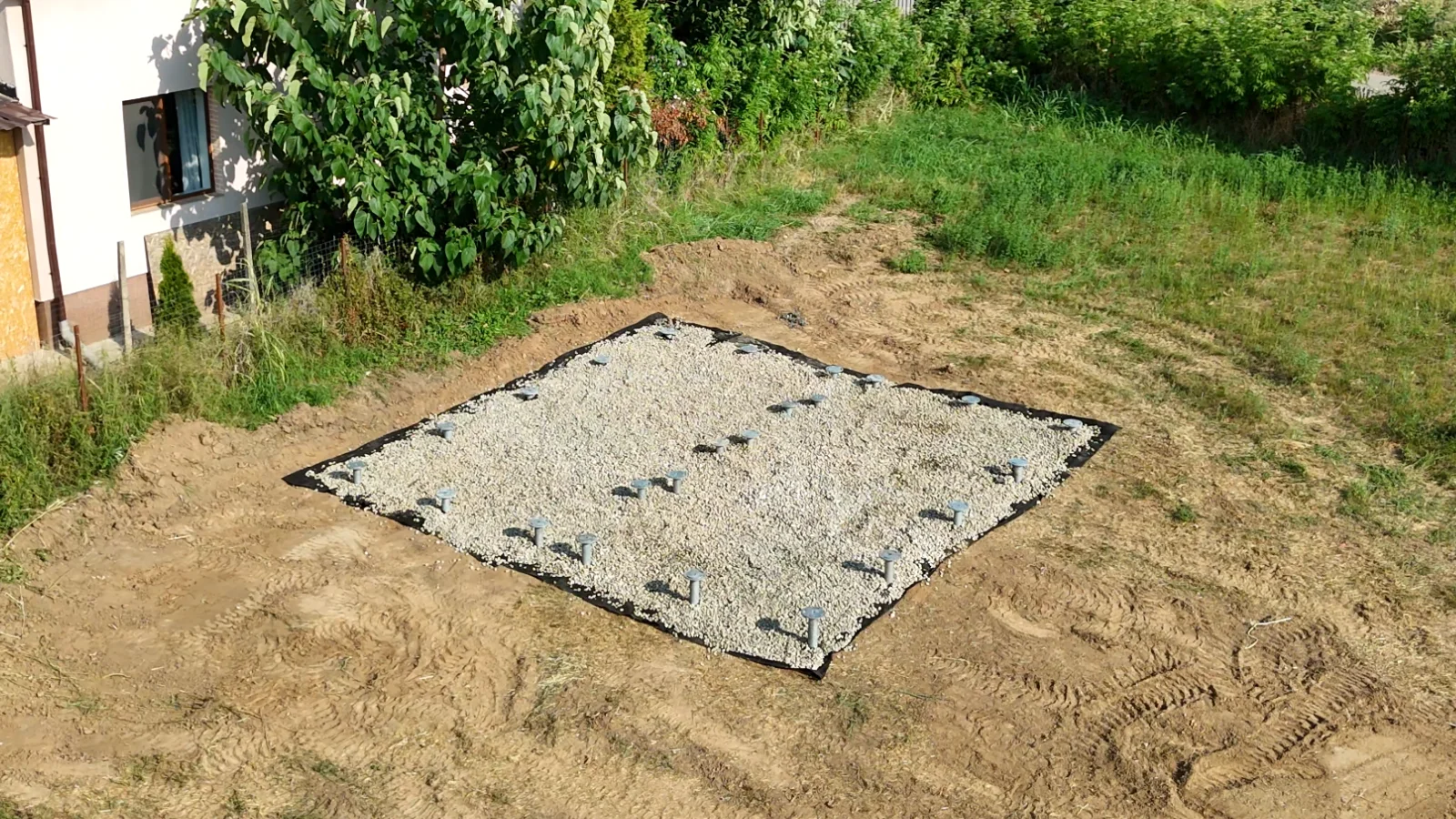
One of the first questions we receive is a simple one: “How much will the foundation cost me?”
For an initial estimate we can talk about a price per square metre. For a real offer, however, the building's area is only the starting point.
In 2026, a steel screw foundation can start indicatively from about €30–35/m² for certain simple assemblies of containers and can reach or exceed €70–75/m² for buildings with heavier loads, level differences, difficult ground conditions or special configurations.
For a single-storey modular house, a MARTETIC indicative benchmark is about €40–55/m² for standard supply and installation. For Timber Frame, SIP or LSF buildings, the indicative range is about €45–65/m².
These values are useful for budgeting. They are not, however, universal rates and they do not replace the analysis of the project.
The cost of a screw foundation depends on the number of foundation points, the type and length of the screws, the ground conditions, machine access, level differences and how the foundation connects to the structure. The price per m² is useful for budgeting, not for sizing the foundation.
Indicative prices for screw foundations in 2026
The ranges below are MARTETIC commercial benchmarks for standard supply and installation, VAT included, under normal access conditions and for usual configurations.
| Type of building | Indicative price |
|---|---|
| Assembly of two or more containers | €30–45/m² |
| Single shipping container, 20 or 40 ft | €35–55/m² |
| Single-storey modular house | €40–55/m² |
| Garage or lightweight outbuilding | €40–60/m² |
| Lightweight steel structure | from €40/m² |
| Tiny house / cabin / platform | €45–65/m² |
| Timber Frame, SIP or LSF | €45–65/m² |
| Terrace, deck or platform | €45–70/m² |
| Gazebo, pergola or carport | €45–75/m² |
| Lightweight house, ground floor plus attic or first floor | €55–75/m² |
The final offer can be below or above these ranges. What matters is the real number of points, the length and model of the screws, the ground, the access, the transport and the services needed.
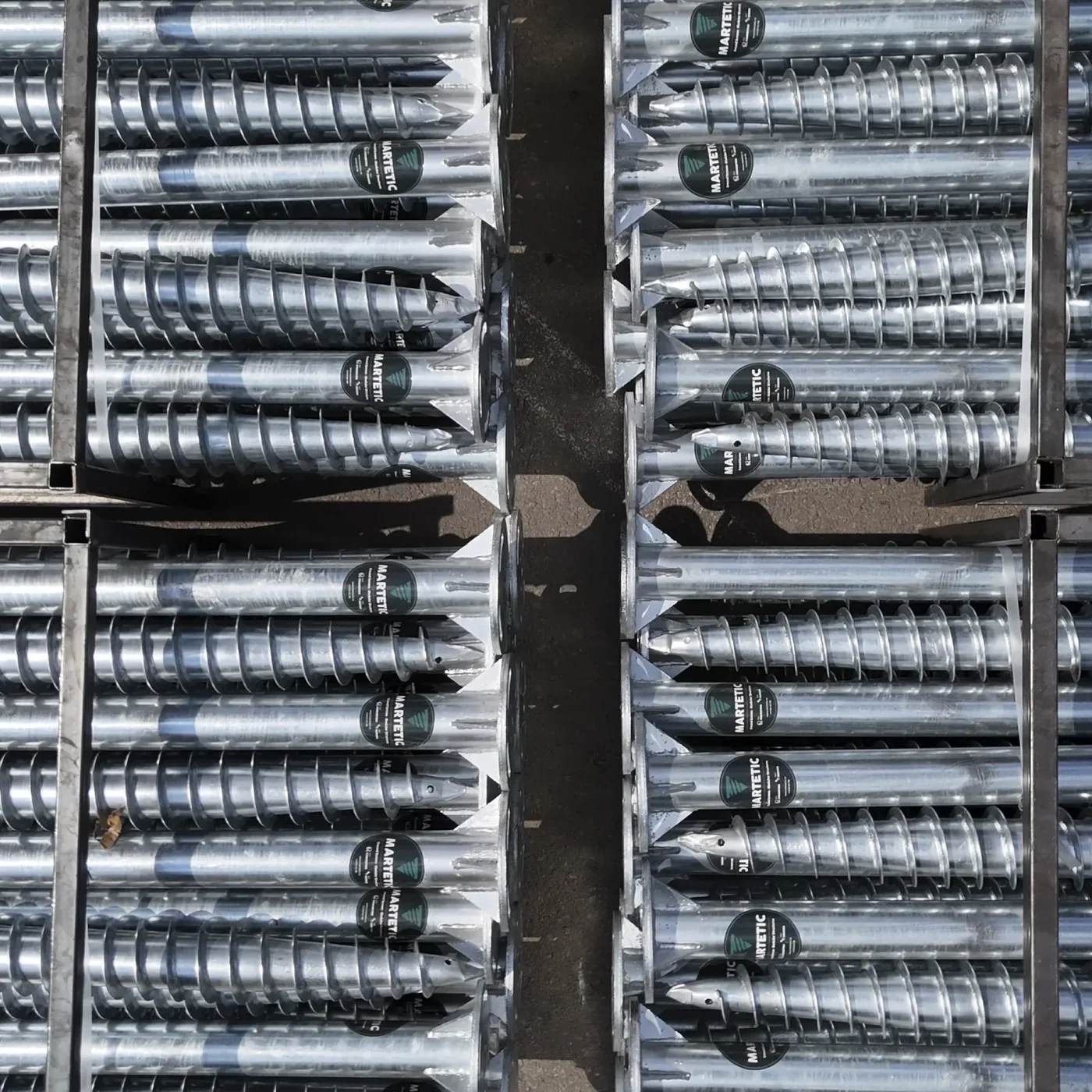
Cost examples for a screw foundation
To make it easier to understand, we can turn the ranges above into a few simple examples.
These calculations are indicative. They do not automatically include transport and mobilisation, ground preparation, geotextile, gravel, design, testing or any steel connecting structure.
Why can't we calculate the foundation by square metres alone?
Two 80 m² houses can have completely different foundations.
The first can be a single-storey house, located on almost flat ground, with good machine access and a simple structure. The second can have exactly the same area but be located on a slope, have larger spans, significant level differences, or require longer screws and an additional steel structure.
The area is the same. The foundation is not.
The same principle applies to containers. A simple container used for storage must not automatically be treated the same as a container converted into a dwelling, with cut-out walls, partitions, finishes and other connected modules.
That is why at MARTETIC we use the area for an initial commercial estimate, and we determine the foundation configuration starting from the real structure and the site conditions.
A real example: foundation for a container of about 6 × 3 m in Giurgiu
In a MARTETIC project in Giurgiu we built the foundation for a modular container of about 6 × 3 metres. The area was about 18 m².
From the area alone we could quickly calculate an indicative budget. For the foundation itself, however, the important information was a different one: the container was supported on 8 foundation screws.
The 8 points were determined for that particular chassis and site. This does not mean that every 6 × 3 m container needs 8 steel piles.
Another container with the same dimensions can have a different chassis, different cut-outs, a different weight, different support positions, or can be located in different ground conditions.
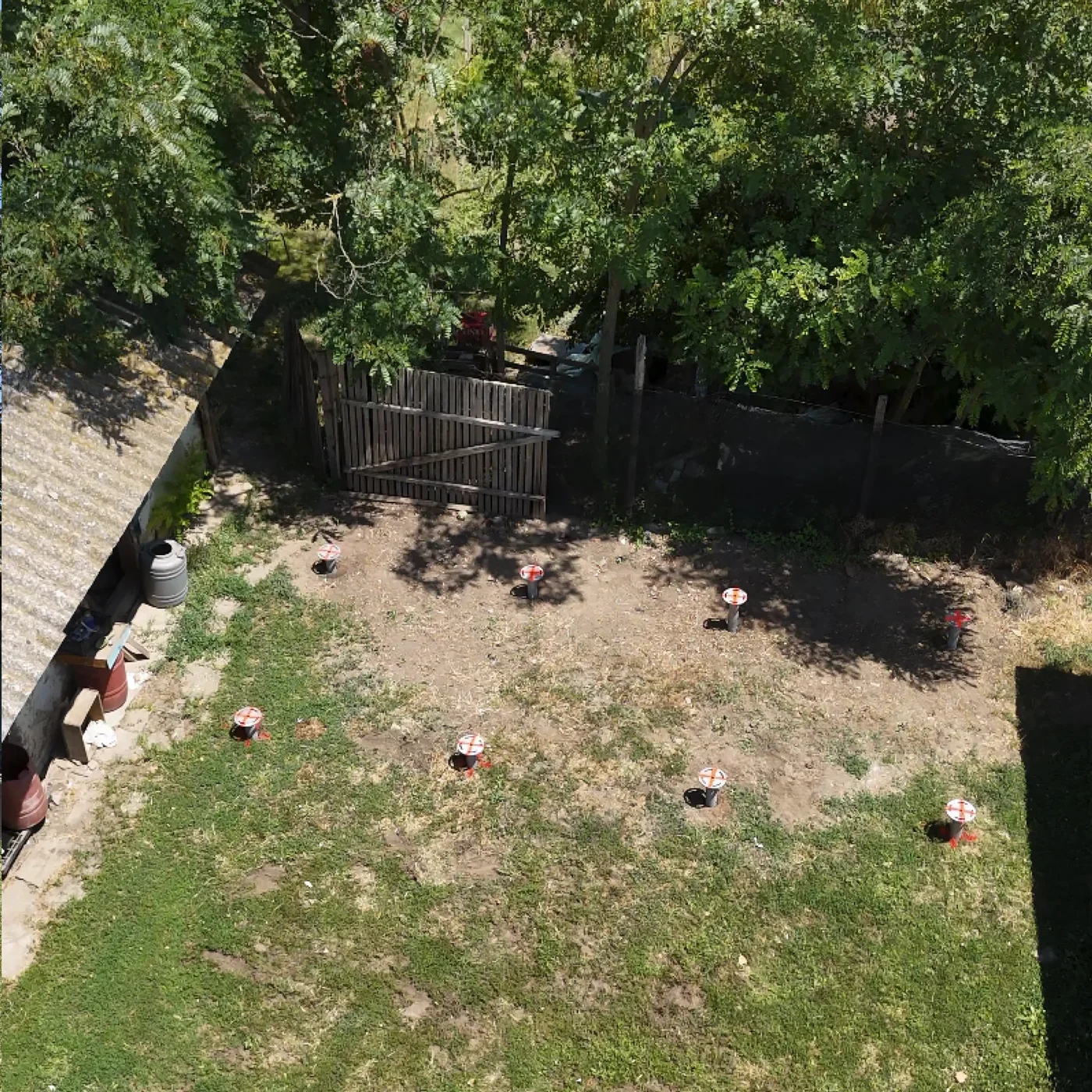
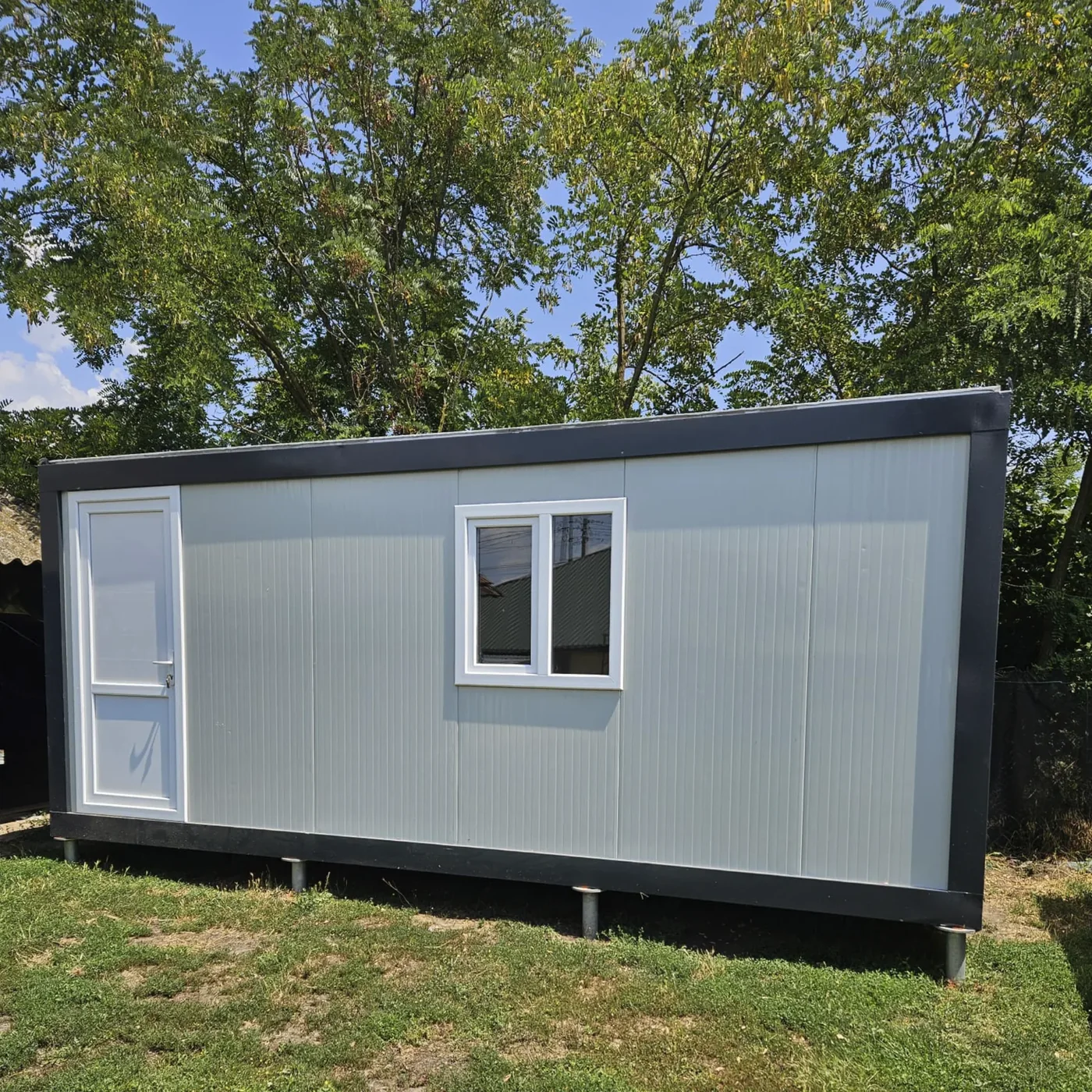
18 m² helps us estimate the budget. The 8 points and their position help us discuss the real foundation.
A real example: three containers and a terrace in Cernica
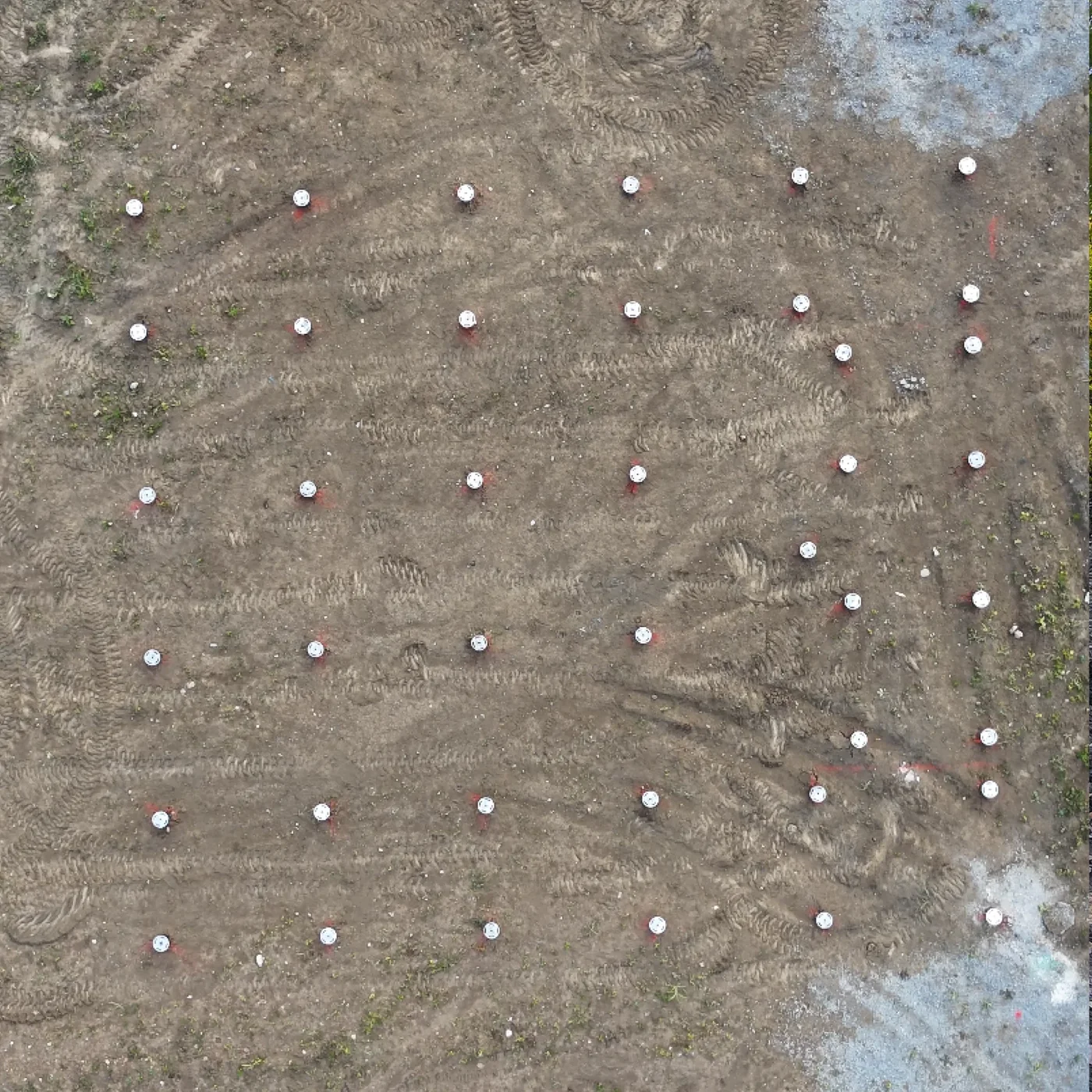
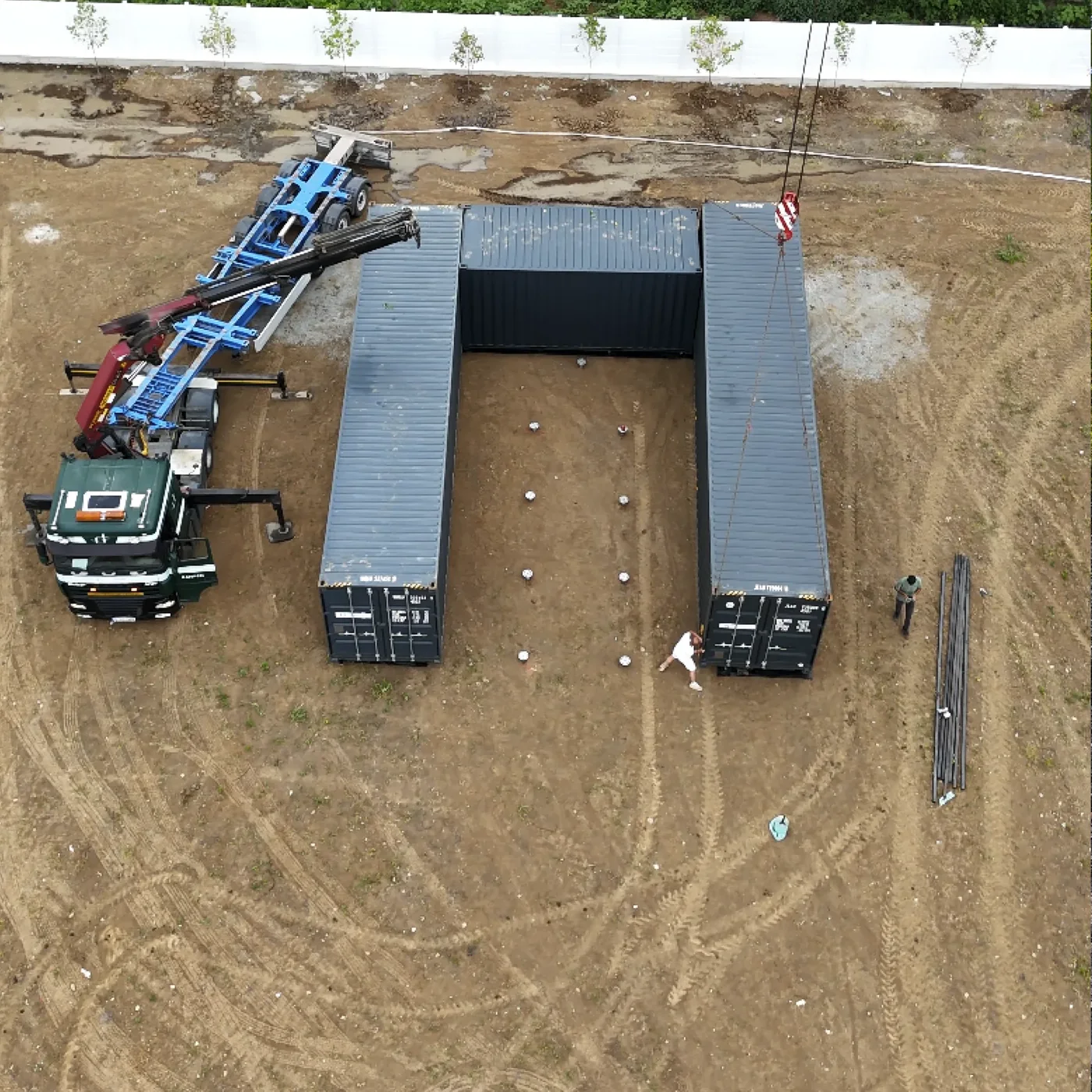
Another relevant project was carried out in Cernica, Ilfov County. Here we had an assembly of three shipping containers and a shared terrace.
For that configuration, 44 M89 foundation screws were used, in lengths of 1,500 and 2,000 mm.
The example answers a question we receive often: “Can't a container simply be put on four piles?” In certain situations, four points can be considered. But it is not a universal rule.
In Cernica, the whole assembly had to be analysed: the real support lines, the position of the modules, the shared terrace, the final level and how the buildings connected to each other.
What influences the price of a screw foundation?
The number of foundation points
The number of screws must be correlated with the position of the beams, load-bearing walls, joints between modules, spans and concentrated loads. Artificially reducing the number of points just to get a lower price can shift the cost into the superstructure or create spans between supports that are too large.
The type and diameter of the screw
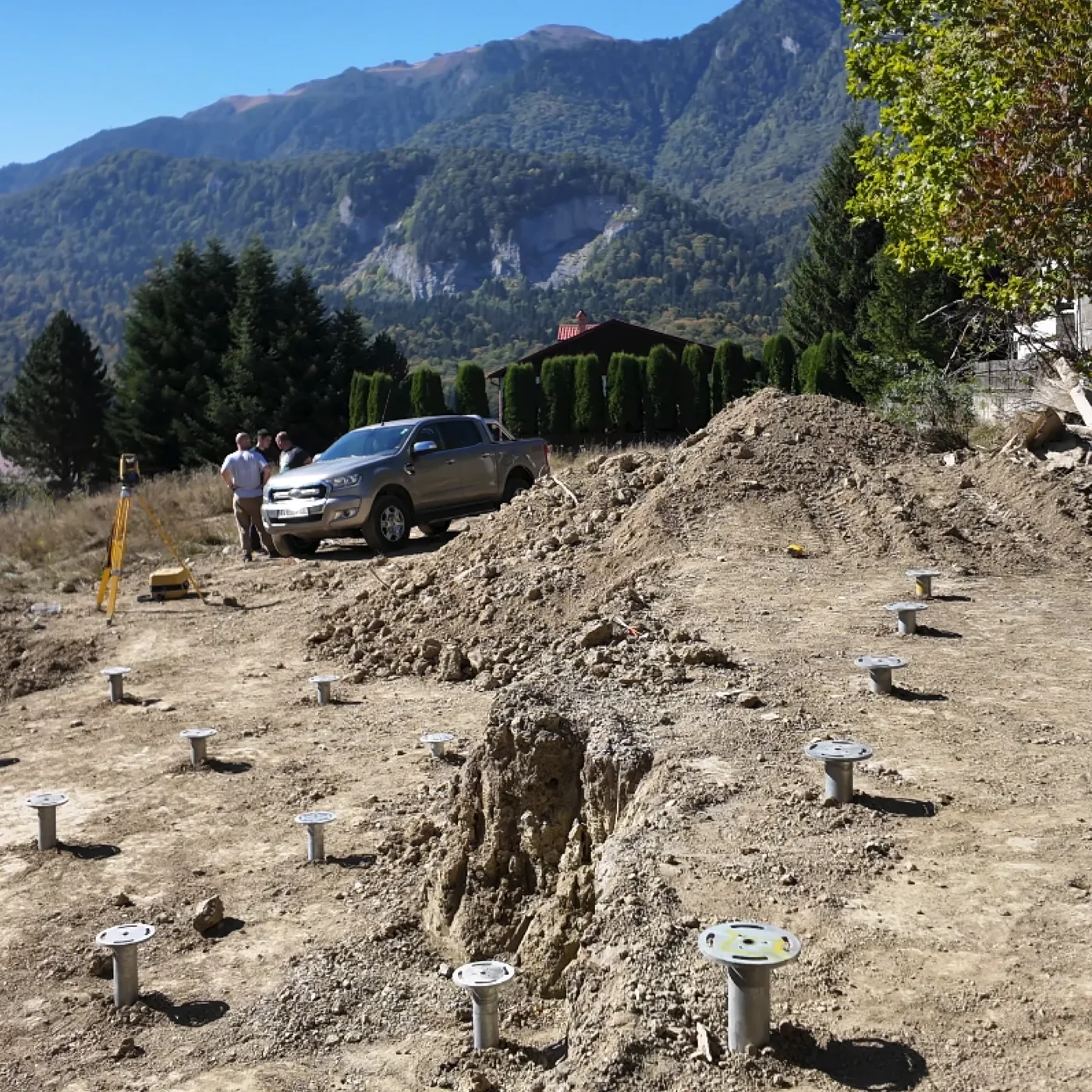
MARTETIC works with the G, M, V and Custom families. An M76 × 1,500 mm and an M89 × 2,000 mm are both foundation screws, but they are not the same product and do not automatically have the same use.
The length of the screws
The length affects the price of the product and the configuration of the foundation. Fill, topsoil, weak layers or level differences can lead to greater lengths or modular systems, but the choice must have a technical reason.
The ground conditions
A stiff clay or a well-compacted sand behaves differently from uncontrolled fill, topsoil or a very weak layer. Coarse gravel, boulders, buried concrete or rock can make installation difficult or impossible at a given point.
Obstacles met during installation
Old foundations, buried concrete or boulders may require repositioning, controlled pre-drilling, a local intervention or a change of configuration. A good offer must explain how these situations are handled.
Machine access
The width of the access, the route to the installation points, the manoeuvring space, the slope, overhead cables and the condition of the ground can change the logistics and the cost of mobilisation.
Level differences
On sloping ground, different lengths, special levels, a levelling structure and more complex logistics may be needed. The technical advantage of screws does not automatically mean a lower cost.
The link between the foundation and the building
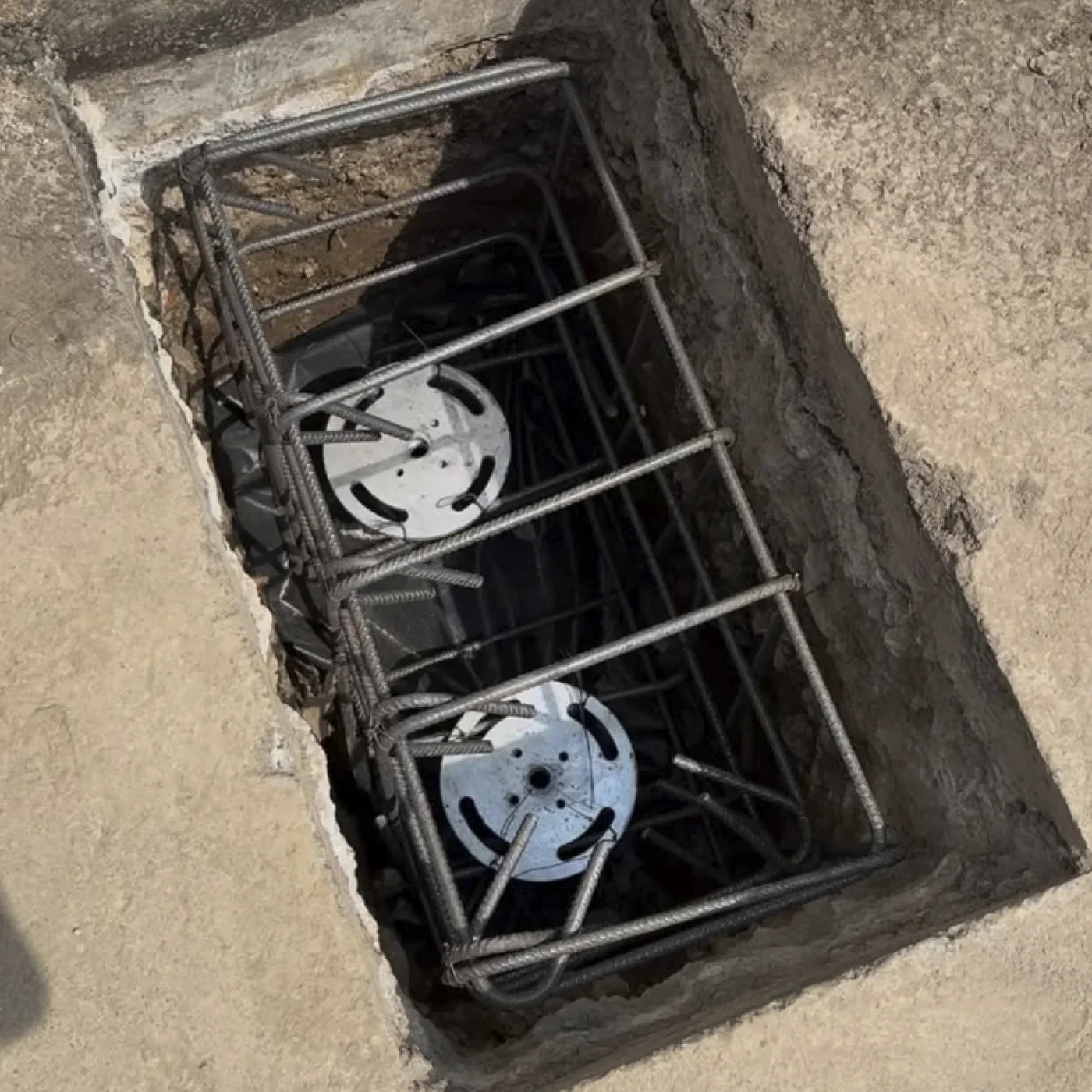
Above the screw there can be a container chassis, a Timber Frame, LSF, SIP, HEA or IPE structure or another system. Flanges, base plates, brackets, gussets and distribution beams are part of the system and can significantly influence the cost.
Testing and documentation
Depending on the project, compression testing, uplift testing, displacement measurement and documentation of the results may be considered. These services are determined and quoted separately when they are needed.
What does a MARTETIC estimate usually include?
May include
- the recommended foundation screws;
- mechanised installation;
- positioning along the axes provided;
- bringing the points to the set level;
- the installation acceptance report;
- the documents available for the selected products.
Can be quoted separately
- transport and mobilisation;
- ground preparation, geotextile, gravel, drainage;
- design and geotechnical study;
- testing;
- the connecting steel structure;
- Custom parts or interventions at obstacles.
That is why, when you compare two offers for a foundation, it is important to check what is included in each of them. A lower price for the screws does not automatically mean a cheaper complete foundation.
How do you compare two offers correctly?
An offer should say clearly which products are used, the number of points, the lengths, flanges and connections, what the installation includes, whether transport and mobilisation are included, what documents are handed over and what works remain outside the price.
It is also important to be clear about what happens if, during installation, an obstacle appears that could not be identified from the information available before the work started.
Only after comparing the same result can we say which offer is really more advantageous.
Is a screw foundation cheaper than concrete?
Not always.
A foundation without concrete can have an economic advantage when it reduces excavation, formwork, removal of soil, wet works, waiting time and site restoration works.
But there are projects in which concrete is more suitable: very heavy buildings, basements, rafts, situations where continuous supports are needed, or sites where foundation screws cannot be installed in a controlled way.
In some cases, even a hybrid solution can be suitable.
How much does the foundation of a modular house cost?
For a single-storey modular house, the MARTETIC indicative benchmark for standard supply and installation is about €40–55/m².
For an 80 m² house, that means a preliminary budget of about €3,200–4,400.
The area, however, does not tell us how many points are needed.
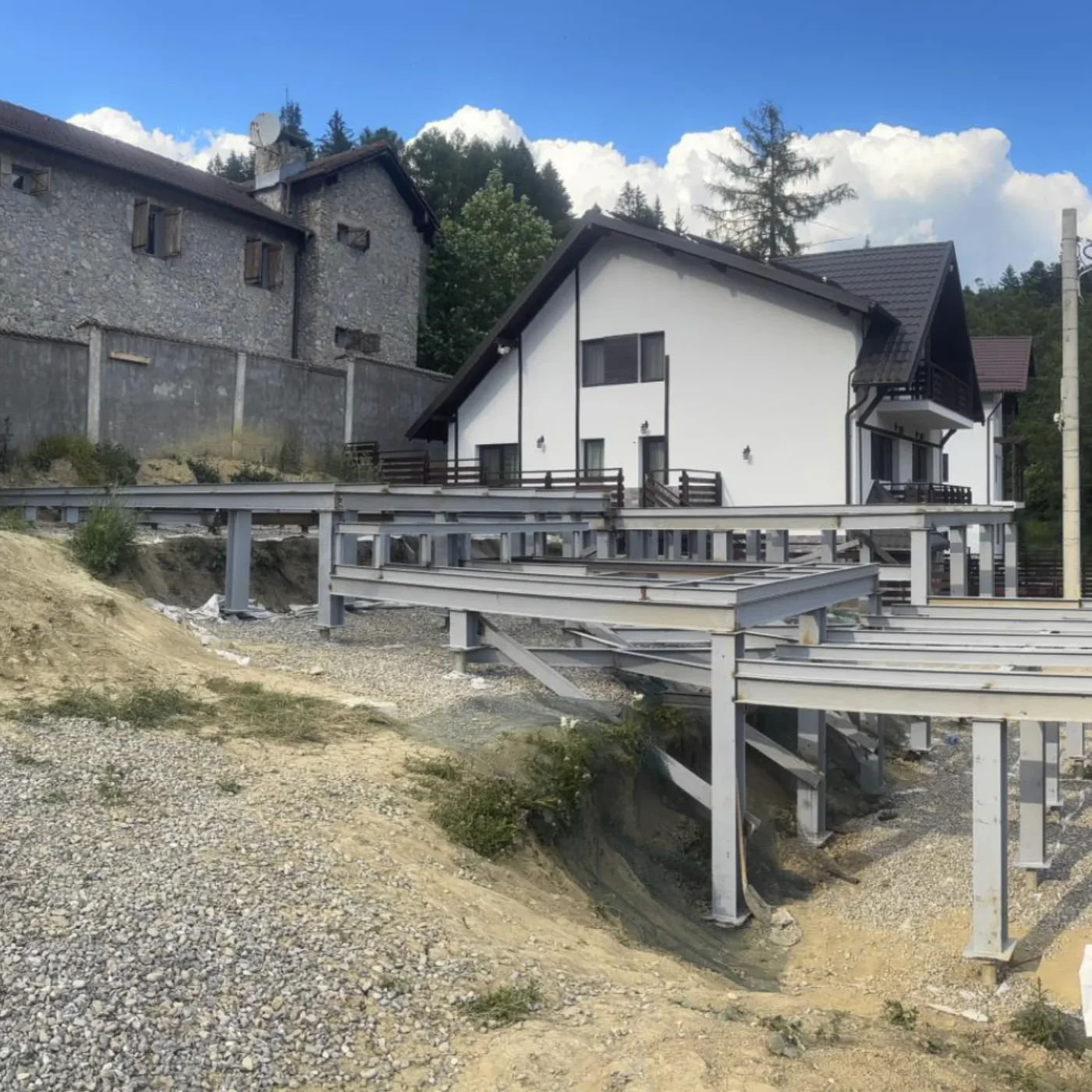
A real example is a MARTETIC project in Bușteni, where for a ground-floor-plus-attic SIP house placed on an HEA structure, 52 M89 screws were used, in lengths of 1,500 and 2,000 mm.
In that project, the foundation and the steel platform had to be seen as a single system.
How much does the foundation of a container cost?
For a single container, the indicative benchmark is about €35–55/m².
For an assembly with several containers, the fixed costs can be spread more efficiently, and the initial benchmark can reach the €30–45/m² zone.
We do not recommend, however, determining the foundation starting from the idea that a container automatically has four support points.
As a preselection benchmark, for a module of about 6 × 3 m, roughly 6–9 points can be considered, and for a module of about 8 × 3 m, roughly 9–15 points, depending on the chassis and configuration.
These values are indicative. They are not recipes for execution.
How much does a foundation screw cost?
It is a different question from “How much does the foundation cost?”
The price of a screw depends on the diameter, thickness, length, thread, flange and the product family.
In a complete foundation, the product is only one of the components. Installation, transport, the total number of points, the connections and, where applicable, the design, the steel structure or the testing must be taken into account.
For product prices on their own, you can consult the guide: Foundation screws: price per piece, installation and the complete cost.
Why can a small terrace have a higher price per m²?
Because many of the operations needed for installation do not decrease in proportion to the area.
The machine must be transported, unloaded and prepared. The positions must be set out. The screws must be installed and brought to level.
If all these costs are divided by 12 m², the price per m² will naturally be higher than if they are divided by a 100 m² platform.
Can extra costs appear after installation starts?
Yes, if the real situation on site differs from the information available at quoting.
An old foundation, an area of buried concrete, a boulder or a utility that requires moving a point may be discovered.
If an intervention that could not have been foreseen at the start is necessary, it must be discussed before the additional work is carried out.
A correct offer must set from the start how such situations are handled.
What do you need to send us for a realistic estimate?
For a first analysis, the following are useful: the plan or a dimensioned sketch, the dimensions of the building, the locality, the type of building, photographs of the site, information about the ground, level differences, the position of the supports if known, and the geotechnical study if it exists.
For containers, the real support positions and the information about the chassis are very useful.
For modular houses, Timber Frame, SIP or LSF, the routes of the beams and load-bearing walls are important.
With this information we can make a technical preselection and an estimate much closer to the real project.
Conclusion: so how much does a screw foundation cost?
If you only need an order of magnitude, for many of the lightweight buildings discussed in this guide we can talk about an indicative zone of about €30–75/m², depending on the type of building and the complexity of the project.
But this is not a universal rate.
A foundation consists of a specific number of points, with specific products and lengths, installed in a particular ground and connected to a particular structure. That is why two buildings with the same area can have different costs.
At MARTETIC we use the price per m² for what it is useful for: a first budget estimate. Then we analyse the project and move on to the real configuration.
Frequently asked questions
Is the price per square metre enough to get an offer?
No. The price per m² is useful for budgeting. The real offer starts from the number and position of the supports, the model and length of the screws, the ground, the access, the transport and the services needed.
What is not included in the indicative price?
The indicative calculations do not automatically include transport and mobilisation, ground preparation, geotextile, gravel, design, testing or any steel connecting structure.
Why can two buildings of the same area have different foundation costs?
Because the foundation depends on the structure, spans, level differences, ground and access, not on the area alone. Two 80 m² houses can have completely different foundations.
How much does screw piling cost?
Indicatively, for 2026, from about €30–35/m² for simple assemblies of containers up to €70–75/m² for buildings with heavier loads, level differences, difficult ground or special configurations. A single-storey modular house is about €40–55/m² and Timber Frame, SIP or LSF buildings about €45–65/m², for standard supply and installation, VAT included, under normal access conditions.
Have a project and want to find out how much the foundation would cost?
Send us the plan or the dimensions of the building, the locality, a few photographs of the site and the information available about the ground. If you have the geotechnical study, you can send it together with the project.
Send the project for analysis